




Whoa, this is neat! I keep a few smart cards in my wallet for day trips. They feel like an elegant compromise between phone apps and bulky hardware devices. At first glance contactless crypto cards look like a shiny piece of convenience, though their security and recovery story is more nuanced and worth digging into before you trust them with serious funds.
Really, I’m serious? Something felt off about early cards I tried; my instinct said the UX was rushed. They promised backup cards, contactless ease, and multi-currency support in a single thin slab. But then I dug into how key management worked across physical backup cards and cloud options, and I found trade-offs that most marketing glosses over. Initially I thought the answer was simple—store seeds offline, distribute backups, and rely on hardware—but actually, wait—let me rephrase that: there are subtle failure modes in card cloning, NFC relay attacks, and social-engineering recovery that complicate that neat picture.
Hmm… that’s interesting. On one hand, contactless smart cards keep keys off phones and away from SIM-swap risks. They make quick payments and chain transactions for small transfers a breeze. And multi-currency support means you don’t juggle dozens of wallets at the airport. Though realistically the question becomes how the card signs transactions when it’s offline, how rate limits and PINs are enforced, and whether you can securely recover funds if a card is lost without exposing a master key.
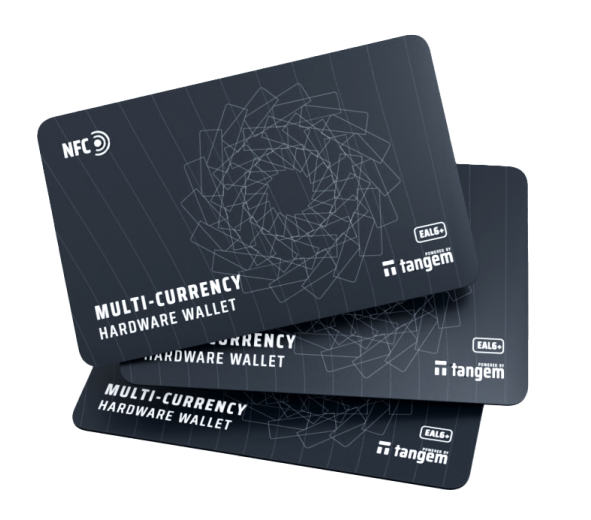
Why contactless + multi-currency matters
Okay, so check this out— I’ve tested a few card providers, and one that kept showing up was tangem wallet. They build cards that are tamper-resistant, contactless, and designed to manage dozens of currencies without needing complicated derivation paths or a separate app for every chain, which feels refreshingly pragmatic. More importantly, their approach to backup cards—pairing an emergency duplicate plastic that can be stored separately or given to a trusted friend—changes the recovery trade-offs compared with single-seed models where you might be forced to memorize a 24-word phrase. That model isn’t perfect, but it is pragmatic and usable for non-tech-native people.
Seriously, this matters. What bugs me about backup cards: if the duplicate is compromised, recovery is compromised too. So you need physical separation, trusted custody plans, and easy revocation options. And the UX for PINs and NFC timeouts must be solid; many companies miss that. If a smart card supports multiple currencies seamlessly, you avoid using bridge services or unstable token wrappers, but you also increase the attack surface since the card must understand many chain rules and signature formats.
I’m biased, but… If you’re adopting cards, practice the recovery flow twice and rehearse losing a backup. Store a duplicate in a safe deposit box and one with someone trusted; encrypt backups. And remember: even with elegant hardware like contactless cards, threat modeling should include physical coercion, lost-or-stolen scenarios, and the human factors that make people reuse PINs or write recovery codes on scraps of paper. Ultimately I came away encouraged by how much can be done in a credit-card form factor if manufacturers prioritize secure element designs, transparent audit trails, and pragmatic recovery options that match how real humans behave.

